The first vertical version of our short outdoor-comedy episode was technically correct.
It was 9:16. It exported at 1080×1920. The file played.
It still needed another pass.
The problem was not the codec or the resolution. A single center crop treated every shot as if it had the same composition. It did not.
Some shots were dialogue. Some showed a character moving through the frame. Others were wide environmental moments where the setting carried the joke. One shot introduced the fictional Widow Maker device, which needed to remain fully visible.
A center crop was fast. It was not always useful.
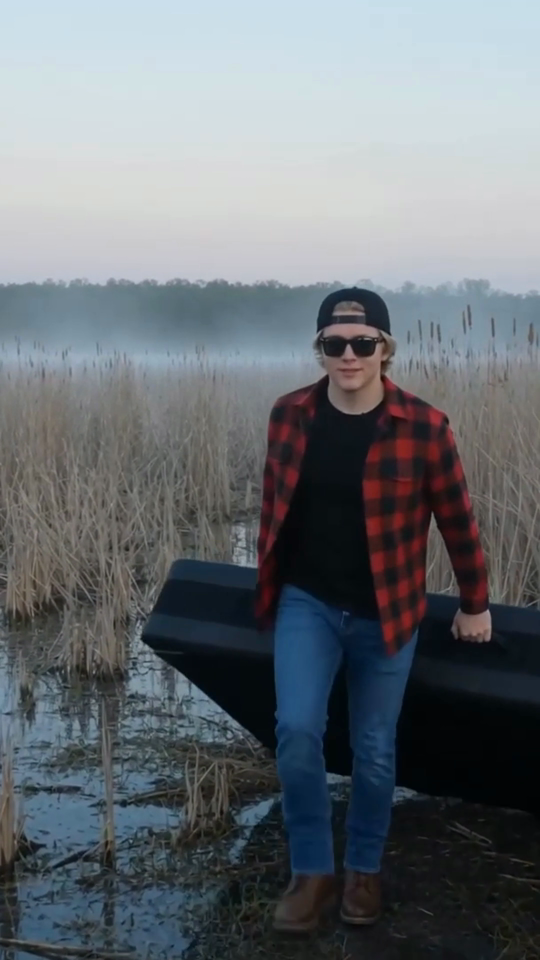
The format change exposed the real edit
Landscape video gives a scene room to breathe horizontally. Vertical video takes that room away.
That changes the editorial question from:
Can this shot fit inside a vertical frame?
to:
What does the viewer need to understand in this vertical frame?
A person can remain technically visible while their gesture is cut off. A prop can remain on screen while its important details disappear. A wide comedy beat can become a confusing close-up. A title can be present but pushed into an area where interface elements cover it.
The first pass showed us where the original composition and the new viewing format disagreed.
We assigned framing by shot purpose
The second pass used different framing decisions for different types of shots:
- Movement shots received a biased crop that followed the subject instead of assuming the center was always correct.
- Dialogue shots used centered framing so faces and expressions stayed stable.
- Wide duck and environment shots kept more of the original scene and used a restrained blurred side treatment rather than destroying context.
- The Widow Maker reveal was framed to keep the full fictional prop and its readable details in view.
- The opening title was rebuilt for vertical-safe space instead of relying on the original landscape placement.
This was not about adding flashy motion. It was about preserving the information that made each shot worth keeping.
The lesson is bigger than this Reel
A video can pass a technical export check and still fail as communication.
That is especially easy to miss when a workflow reports only resolution, duration, codec, file size, and successful export. Those checks are necessary, but they do not answer whether the edit still works on a phone.
For every important shot, we also need to ask:
- What is the viewer supposed to notice?
- Does the crop preserve that subject?
- Is the action still understandable without the original width?
- Does the framing change abruptly between adjacent shots?
- Are titles and captions inside a safe viewing area?
- Does the first frame explain what the video is before motion begins?
Those are editorial QA questions, not just encoding questions.
Verification after the rebuild
The revised Reel was exported at 1080×1920, 9:16, 24 fps, with H.264 video and AAC audio. Runtime is 61.033 seconds. The full file decode passed.
The review also confirmed that the opening title remained readable, the Widow Maker case stayed visible, the movement shot used a more useful subject-biased composition, environmental shots retained context, no black or glitch frames appeared, and the original episode export remained untouched.
The important result was not simply that the file played. It was that the story beats survived the format change.
Watch the verified 61-second vertical Reel
A better production habit
For future short-form edits, vertical delivery should be considered before the final export rather than after it. That does not mean every project needs a separate shoot. It means the edit should identify vertical-safe moments early: close-ups with clean subject separation, movement that can follow a predictable path, props that remain readable when the frame narrows, titles designed for phone-safe placement, and wide shots used intentionally rather than as leftovers.
The crop is part of the edit.
When a video moves from landscape to vertical, the job is not to squeeze the old frame into a new rectangle. The job is to re-decide what the viewer should see.
That extra decision is what turns a technically valid export into a usable piece of content.