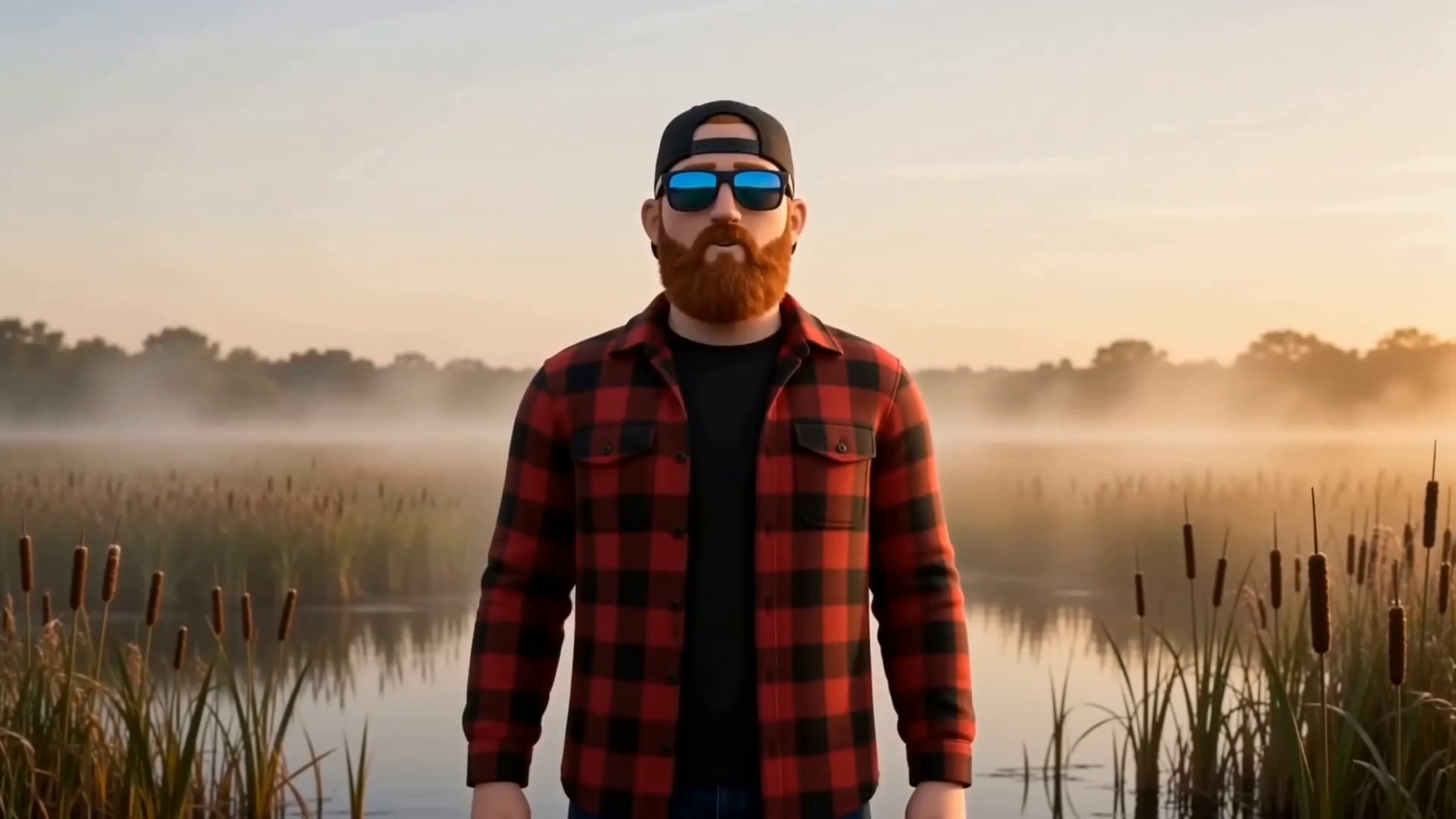
Episode One of MK & Tike Outdoors started as a simple joke: put two overconfident field characters in a marsh, give Tike an absurd device, and let the ducks have the last word. Turning that premise into a watchable episode required much more than generating a few talking clips.
We had to build a repeatable character language, plan the comedy beats, generate coverage, keep the fictional prop clearly fictional, assemble the edit, and then make the media survive technical and editorial QA.
This is the complete production process behind the first generated working cut.
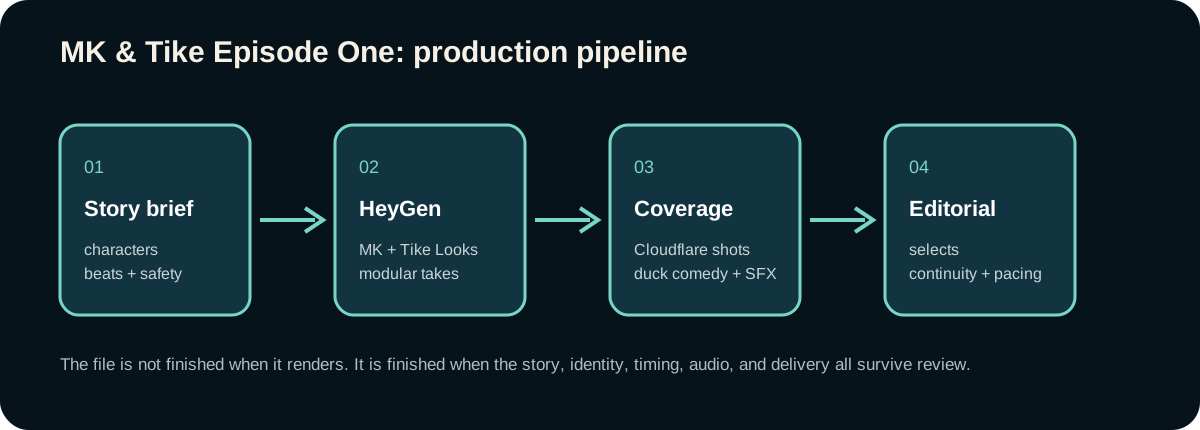
Start with the joke and the boundaries
The episode is called The Waterfowl Widow Maker. The title sounds like an over-serious outdoor-show segment, while the actual story is a buddy-comedy escalation:
- MK starts with a normal method.
- Tike arrives with an oversized “advanced” solution.
- The device gets a dramatic name and an even more dramatic explanation.
- The birds approach at the worst possible moment.
- The device activates, the birds scatter, and the field report becomes damage control.
- The ducks talk smack about both of them.
That last beat mattered. The ducks are not background decoration; they are the episode’s Greek chorus. The locked dialogue order was Drake, Hen, then Drake again so the rhythm could land as three distinct jokes instead of one anonymous animal voice.
The safety boundary was equally important. The Widow Maker is a fictional comedy prop. No real weapon is fired, and the boom and environmental reaction are created in post. The episode explains the gag without turning it into instructions for building or operating dangerous equipment.
Define the visual language before generating shots
The show uses a hybrid look: realistic outdoor environments and waterfowl plates, with consistent stylized character performances for MK and Tike. That contrast is the point. The world plays like a serious field program; the personalities behave like animated comedy characters who have wandered into it.
The rule is simple: the environment carries realism, and the characters carry the comedy. A generated character cannot be pasted into a random plate and called finished. Scale, angle, lighting, color, contact shadows, and motion all have to agree.
The avatar identity comes first
Before generating the episode takes, we locked the two recurring character identities. These are the actual reference inputs used to establish the MK and Tike avatar lanes:
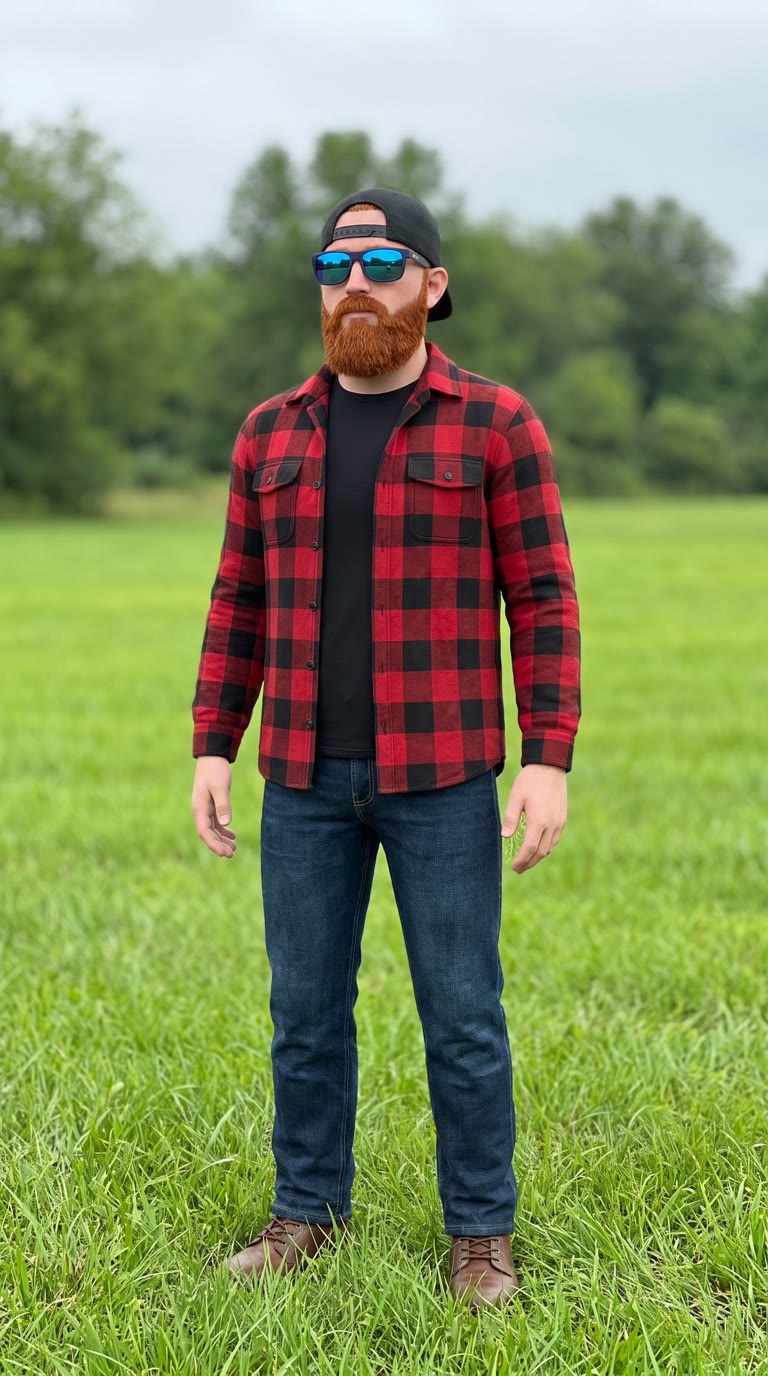
MK reference input used before generation.
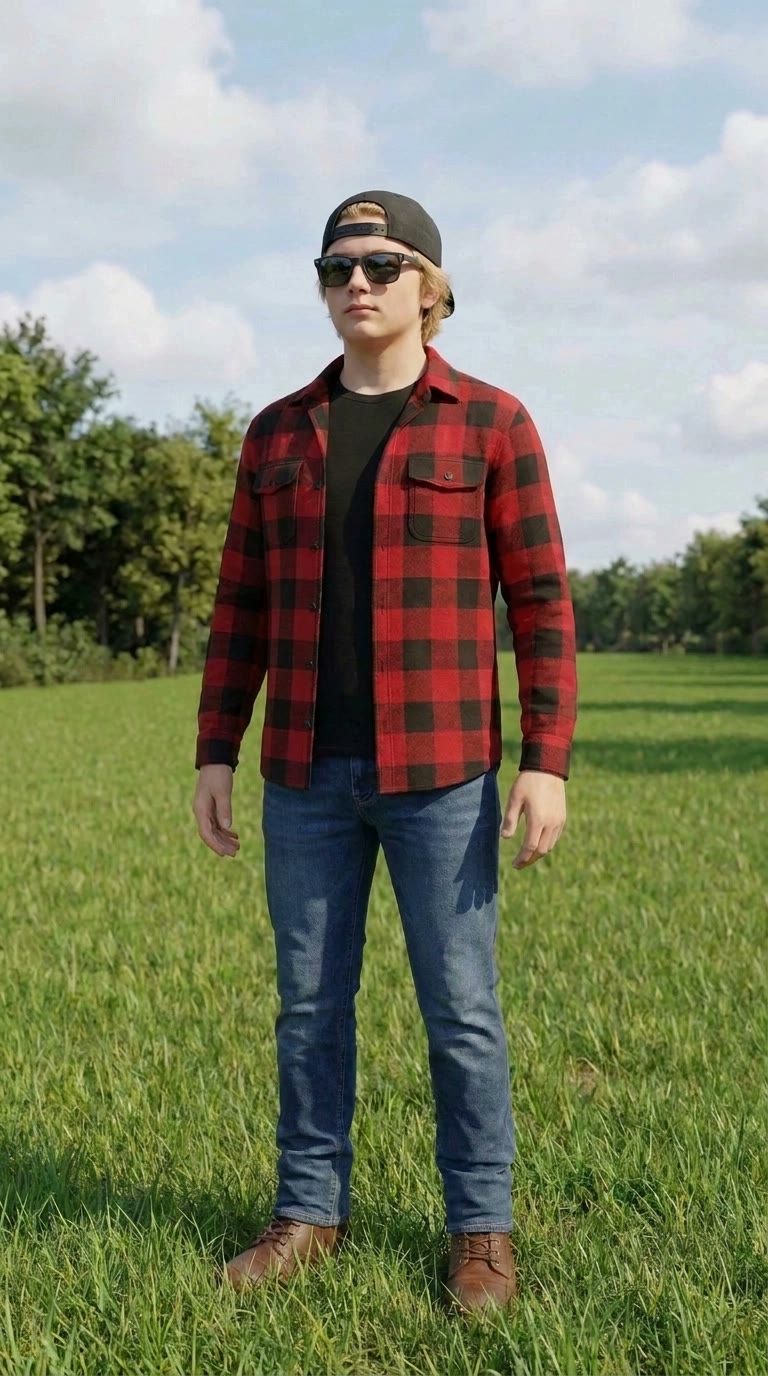
Tike reference input used before generation.
The references are identity anchors, not final scene frames. They gave the HeyGen Looks a stable target before we started generating modular dialogue coverage.
We also kept the project organized into separate lanes:
- Brief and storyboard: the story beats, dialogue order, safety notes, and episode plan.
- Character performance: approved MK, Tike, and duck takes.
- Environment and reference media: the marsh, blind, water, reeds, and waterfowl context.
- Assembly: selected segments, title cards, captions, sound effects, and end cards.
- Review: contact sheets, decode checks, audio checks, and editorial notes.
That separation prevented a rejected take, a review copy, or a duplicate normalized file from quietly becoming the master.
Build reusable character coverage in HeyGen
We used the saved HeyGen Looks for MK, Tike, and the ducks rather than inventing a new face for every shot. The useful unit was not “generate the whole episode”; it was “generate a modular take that can do one editorial job.”
The first coverage batches included:
- MK explaining the normal method.
- Tike arriving with the advanced solution.
- Tike naming the Widow Maker.
- Tike pitching the fake science.
- MK expressing doubt.
- Tike having a coffee emergency.
- MK and Tike reacting around the activation and aftermath.
- The duck smack-talk sequence.
The approved cloud-buster reveal and reaction shots were stored as canonical character-performance assets. The exaggerated old-school cannon silhouette stayed because it is part of the joke, but the edit and disclosure make clear that it is a fictional prop.
This modular approach gave us options. It also created a new responsibility: every take had to be labeled, probed, and reviewed before it was allowed into the assembly.
The first generated performance checks
The first usable outputs were reviewed as contact sheets, not accepted from filenames alone. These are real review artifacts from the MK/Tike character-performance lane:
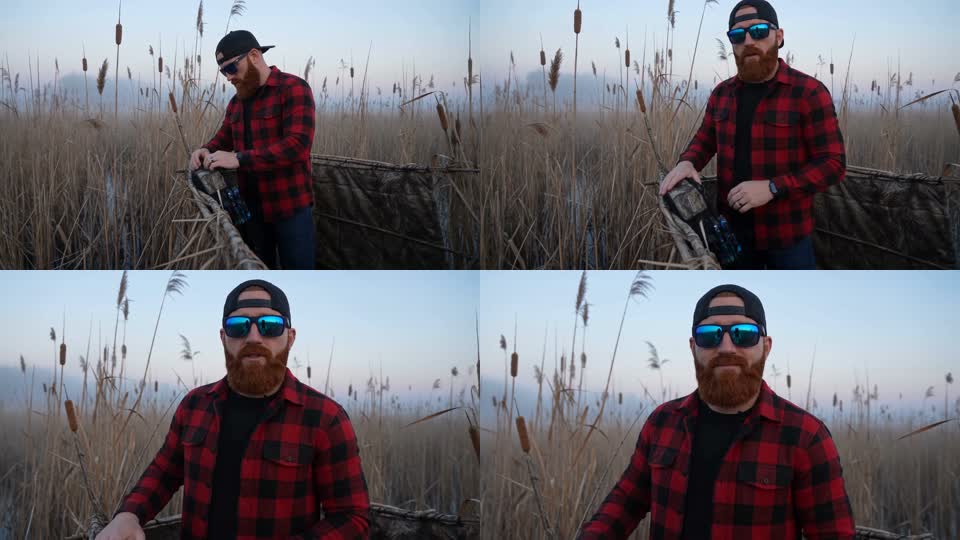
MK coverage for the normal-method beat.
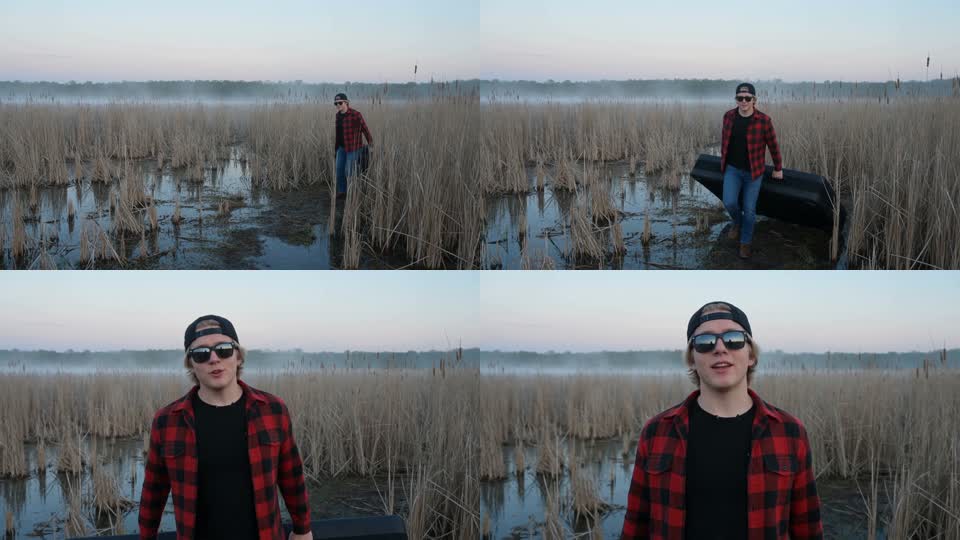
Tike coverage for the advanced-arrival beat.
Add generated coverage where the story needs it
HeyGen carried the main MK/Tike performance lane. Additional generated coverage filled specific story beats that the first batch did not cover, including the off-switch, the “did it work?” reaction, the county-line exchange, and Tike’s dominance payoff.
Those shots were not treated as interchangeable filler. Each had a place in the storyboard. We selected one usable version per beat, excluded raw and duplicate copies, and documented the visible style difference between the HeyGen lane and the additional generated lane instead of pretending they were identical.
The ducks also received a dedicated comedy beat. Their dialogue was planned as a sequence—male voice, female voice, male voice—so the scene could function as an actual punchline rather than a single effect layered over wildlife footage.
The duck performance received its own review lane because the final joke depends on dialogue order and distinct voices.
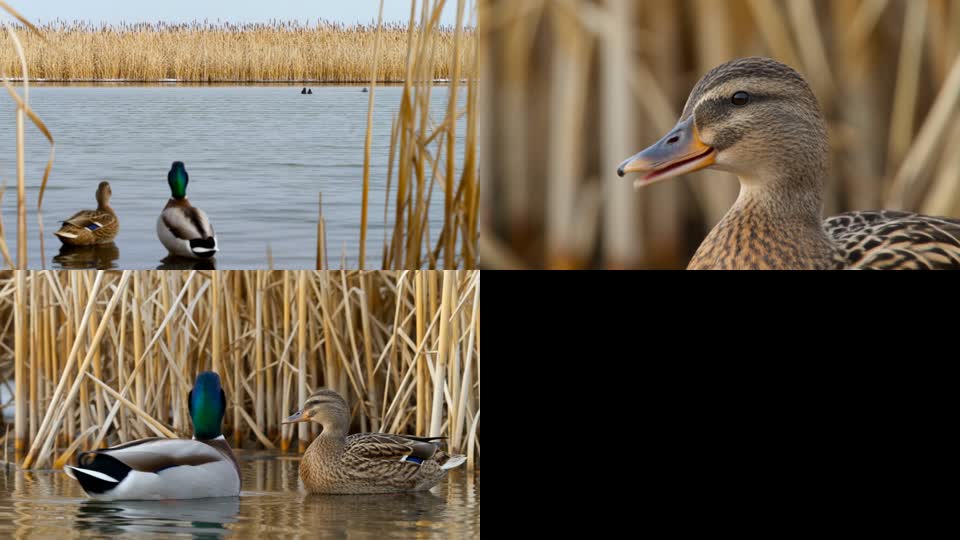
Duck performance review sheet for the final smack-talk button.
Edit against the plan, not against the folder
The most important editorial pass was not the first render. It was the comparison between the render and the storyboard.
A folder full of clips can make an assembly look productive while still producing a weak episode. We checked every selected segment against its intended role:
- Does the opening establish the marsh before the personalities take over?
- Does MK’s normal method arrive before Tike’s escalation?
- Is the device reveal separate from the device name?
- Does the fake science pitch have room to breathe before MK doubts it?
- Does the coffee emergency happen before the activation payoff?
- Is the boom followed by a readable reaction?
- Do the duck voices arrive as a three-line comedy button?
- Does the final field report close the story instead of merely ending the file?
That pass removed misplaced clips, extra coverage, repeated holds, duplicate renders, and segments that were technically valid but editorially wrong. The final titled render uses the approved editorial order and the project’s own generated coverage rather than the supplied example/reference video.
The real edit beats
These stills come directly from the plan-aligned Episode One assembly. They show the editorial chain as it happened: setup, escalation, prop reveal, and comedy payoff.
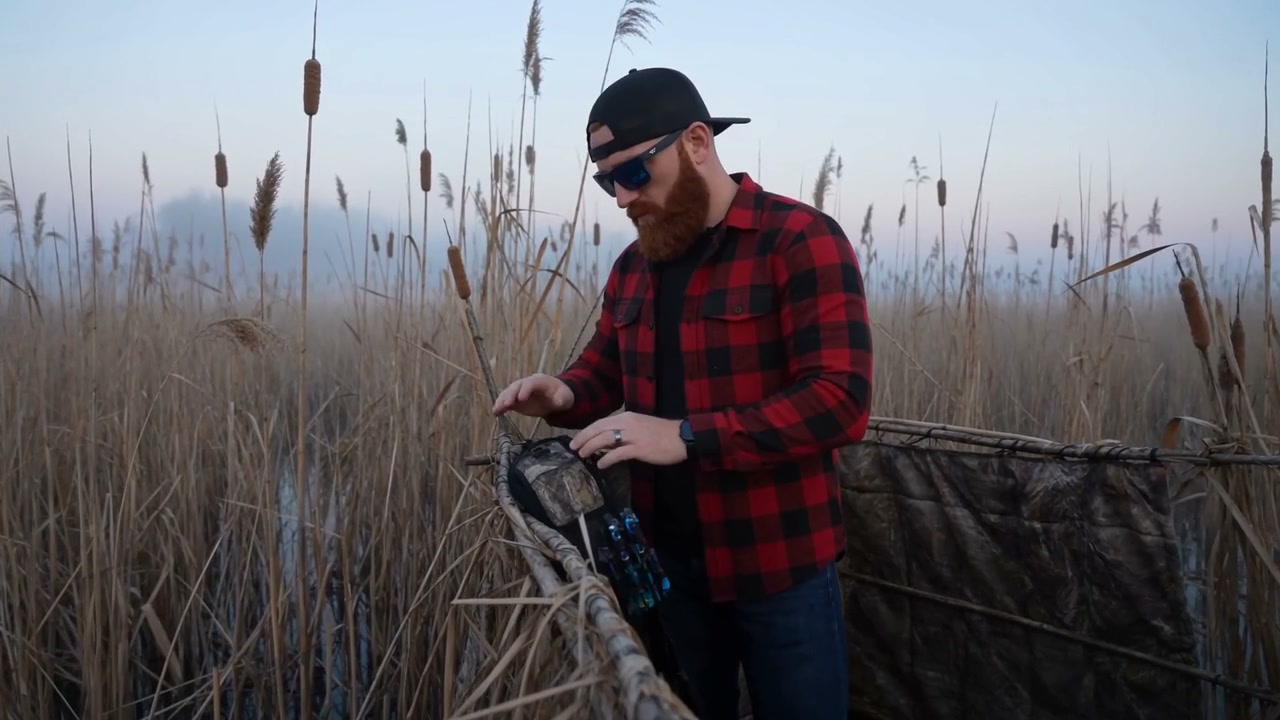
01 — MK establishes the normal method before Tike changes the temperature of the scene.
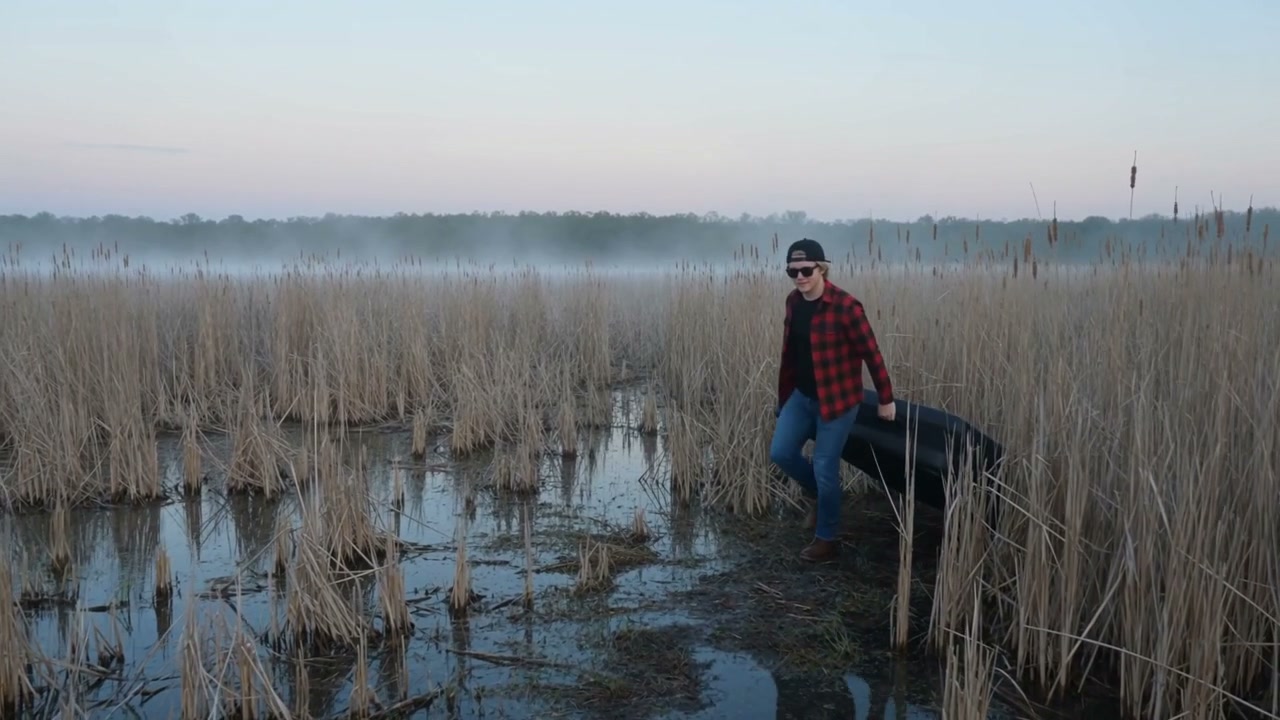
02 — Tike enters with the oversized solution and the confidence to sell it.
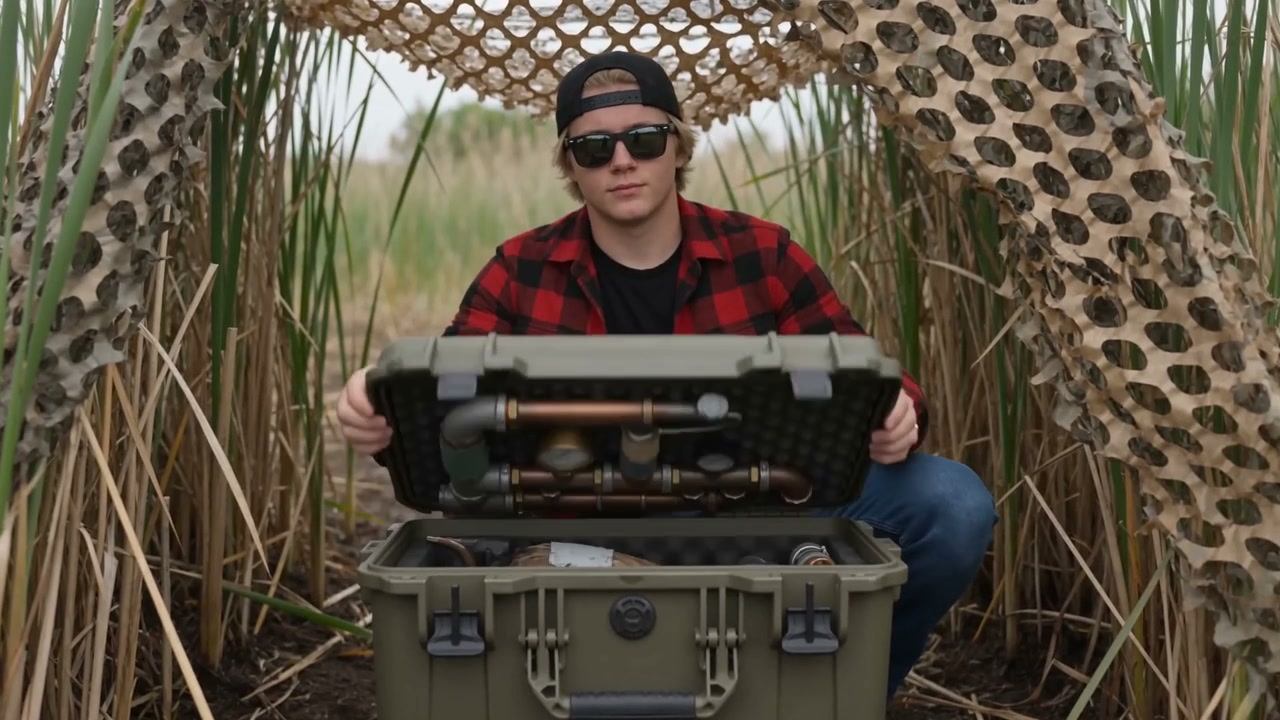
03 — The fictional Widow Maker becomes a visual prop, not just a line of dialogue.
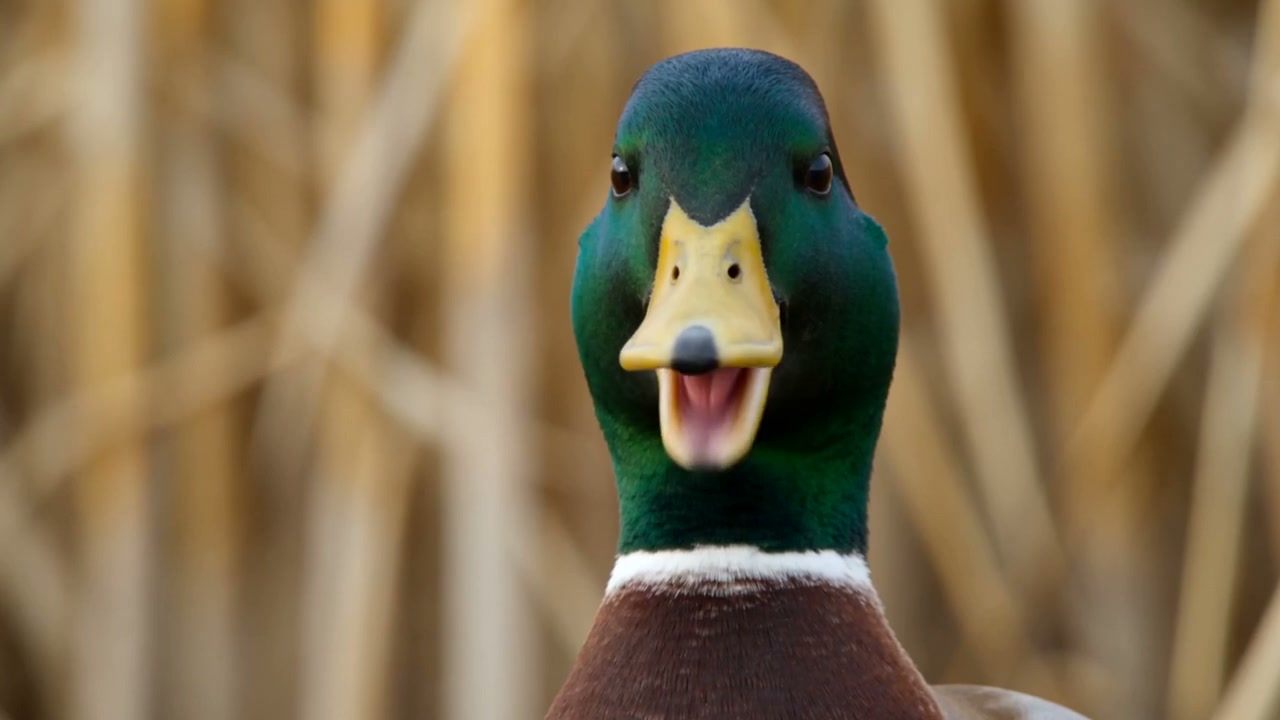
04 — The ducks get the last word, which is the comedy payoff the edit was built around.
Treat sound as part of the joke
The edit uses deterministic title and disclosure cards, then layers the sound design after the picture order is stable. The fictional device gets a spool-up and pressure-rattle treatment, followed by a comedic off-screen boom and a distant reaction beat.
Sound effects are timed to the story event, not dropped onto a random timestamp. The mix is normalized and resampled consistently so the dialogue, effects, and end card do not change character from one segment to the next.
This is also where the safety framing becomes audible: the “boom” is a post-produced comedy event, not evidence of a real device being fired.
QA the actual export
The working generated cut was not accepted because FFmpeg completed. It was checked as a piece of media:
- Primary final render:
ep-one-titled.mp4 - Runtime: 60.999 seconds
- Frame: 1920×1080
- Frame rate: 24 fps
- Video: H.264
- Audio: AAC, 44.1 kHz stereo
- Full decode: PASS
- SHA-256:
46280c4bbd2ad7edac04fef5571f8e925f7d0abbc97816fbae1a8e54355052c4
We also reviewed contact sheets and the timeline for misplaced or extra material. That distinction matters: a technically playable render can still be the wrong edit.
The vertical version is a separate editorial decision
After the episode cut, we created a vertical showcase Reel from approved material. That export is not just the 16:9 episode squeezed into a phone frame. It uses shot-aware framing:
- right-biased framing when Tike moves through the composition;
- centered framing for dialogue and character beats;
- full environmental treatment for wide duck shots;
- a readable centered frame for the Widow Maker case;
- a safe opening title for 9:16 delivery.
The verified Reel is 1080×1920, 24 fps, 61.033 seconds, H.264/AAC, with a full decode pass and no black or glitch frames. The vertical cut is useful as a showcase asset, but the production article is about the broader Episode One process and the generated working cut behind it.
What the first episode taught us
The production lesson is that generative video works better when treated as coverage, not as a one-button episode author.
The reliable loop is:
- Write the beat.
- Generate the smallest useful performance take.
- Preserve the source and label the asset.
- Review the take against the storyboard.
- Assemble only approved selects.
- Add deterministic titles, captions, and disclosures in post.
- Mix and normalize the audio.
- Decode and visually inspect the export.
- Make a separate editorial pass for every delivery format.
That loop is slower than throwing every clip into a timeline. It is faster than trying to rescue a padded episode after the fact.
Watch the final episode render
This is the final titled 16:9 Episode One render—not the earlier edit attempt:
The final render is the delivery version used for the article’s primary episode reference. The older generated-version review file is no longer referenced or included in this article’s asset manifest.
The vertical delivery cut
The same production was also delivered as the shot-aware smart 9:16 Reel. It keeps the vertical framing decisions separate from the 16:9 episode master:
- Smart Reel runtime: 61.033 seconds
- Frame: 1080×1920
- Frame rate: 24 fps
- SHA-256:
eb8baddaa9e338a8db4718ce4c86fb6fa26075c49d5f1625d57b74787555fd2d
Closing field note
MK & Tike Outdoors Episode One is a small production, but it contains the whole lesson: the story is planned before the prompts, the avatars are locked before the takes, generated media is selected instead of blindly concatenated, sound carries the escalation, and every export gets judged as an edit—not just as a successful render.
That is how we turn a funny premise into a repeatable production system.